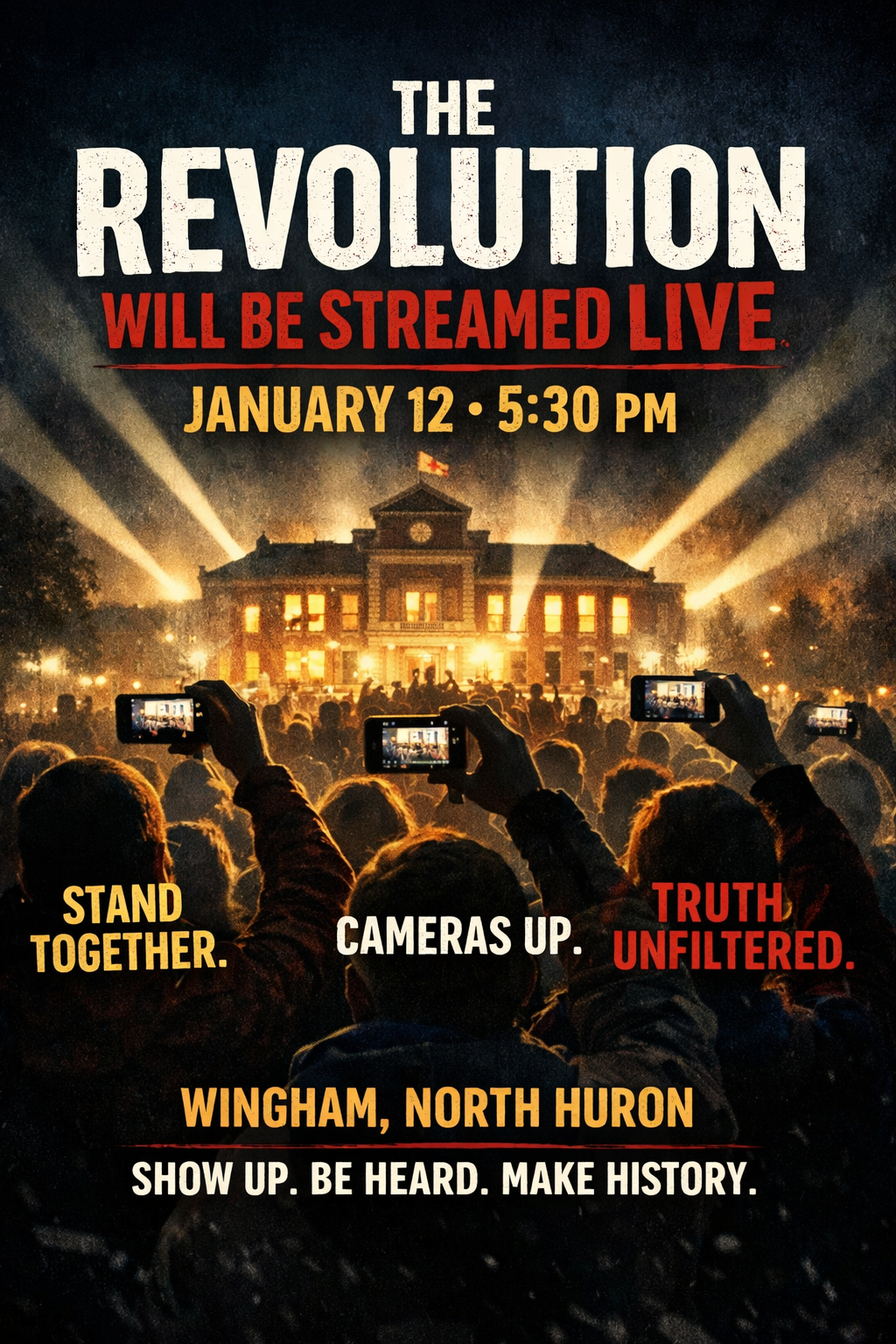
(WINGHAM, North Huron, ON — Residents and members of the press are preparing to attend the January 12 North Huron council meeting in force, arriving early, cameras in hand, determined to record proceedings and ask questions publicly and peacefully.
North Huron Reeve Paul Heffer is refusing to enforce any bylaws in North Huron, from recording council meetings, asking questions at meetings, parking viloations to obstructing sidewalks. Paul Heffer has been rendered moot. Paul Heffer was scared to enforce the law, even with the secret police there backing him up.
The half hour before the scheduled meetings at 6:00 p.m., has become a focal point for growing concern over transparency, public participation, and the enforceability of council rules inside the chambers.
At the previous meeting on December 15, members of the public openly recorded council proceedings despite the presence of police. No enforcement action was taken. Cameras continued rolling. Questions continued being asked.
That moment, many say, marked a turning point.
Despite a long-standing “no recording” policy cited by council chair Paul Heffer, the rule was not enforced—raising fundamental questions about whether the bylaw applies, whether it is lawful, and whether council leadership has the authority or willingness to act on it.
Legal experts have long noted that recording public meetings is protected under Canadian principles of open government, particularly when no disruption occurs. Attendees at the December meeting remained calm, orderly, and compliant with decorum—while continuing to document what unfolded.
Observers say the inability to stop lawful recording, even with police present, underscored a deeper issue: uncertainty at the top of council about the scope of its own powers and bylaws.
As January 12 approaches, organizers say the public intends to do exactly what it did last time—show up, follow the rules, ask questions, and record.
“This isn’t about disruption,” said one attendee. “It’s about visibility. When power is exercised in public, it should withstand public scrutiny.”
Council leadership has not clarified whether the recording policy applies to the council’s own property, whether it has been legally reviewed, or why it was not enforced at the last meeting. That silence, critics argue, speaks louder than any enforcement attempt could.
Residents say the message is simple: council chambers are not private boardrooms. They are public spaces, paid for by taxpayers, meant for accountability—not control.
January 12 is shaping up to be less about confrontation and more about a test—of governance, transparency, and whether elected officials can operate confidently under the same scrutiny they routinely impose on the public.
Cameras will be on. Questions will be asked.
And this time, no one expects the public to back down.